Time-bound response
Trace queue, compute, transfer and dependency time by percentile; protect tail behavior as load rises.
CognoSys treats compute, accelerators, data movement, concurrency, storage, networking and scheduling as one measurable system. Performance work begins with the decision or result that must arrive on time.
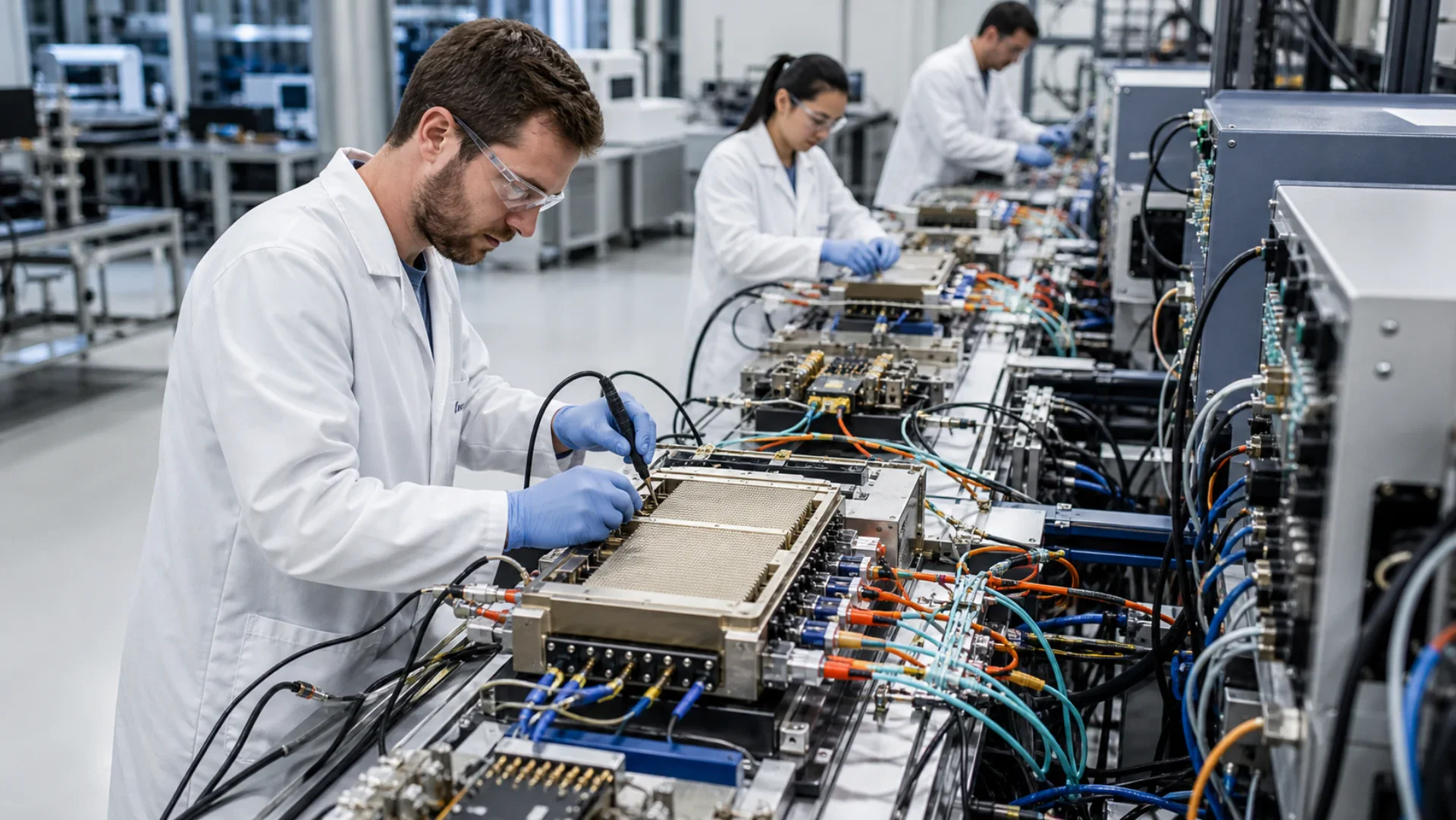
Interactive inference, media transformation, simulation, search and batch analytics have different arrival patterns, data shapes and completion objectives. We identify the unit of work, concurrency, dependencies and consequence of delay before mapping infrastructure.
Trace queue, compute, transfer and dependency time by percentile; protect tail behavior as load rises.
Balance batching, parallelism and resource saturation without creating unbounded queues or unacceptable completion variance.
Partition durable work, checkpoint progress and schedule against data locality, accelerator availability and recovery window.
Bound buffering, event-time delay and backpressure while maintaining a defined degraded mode.
CPU, GPU and specialized acceleration are evaluated against kernel behavior, memory footprint, transfer overhead, numerical requirements and utilization. A faster device does not improve a path starved by serialization, host transfer or a remote dependency.
Measure application, runtime, kernel, allocation and transfer behavior with representative inputs and concurrency.
Co-locate dependent stages, reuse loaded state and minimize movement across process, host, zone and region boundaries.
Use admission control, quotas, priorities and topology-aware placement so burst traffic cannot monopolize the system.
Index layout, cache policy, object size, compression, serialization and network path can dominate total time. The architecture identifies which data is immutable, reusable, streamable or recomputable and places it accordingly.
Queues absorb variation only when they have capacity, age limits and ownership. Admission control protects dependencies; worker pools expose utilization and wait time; backpressure travels toward producers before memory, connections or downstream quotas collapse.
Capacity planning connects arrival rate, service time, concurrency, working set, warm-up and failure reserve. Scaling policy accounts for provisioning delay and minimum efficient batch size while distinguishing sustained growth from a short burst.
Record workload, software, hardware, data and environment so measurements remain reproducible.
Preserve capacity for zone loss, maintenance, rebalancing and traffic variance rather than targeting permanent saturation.
Track completed product work alongside compute time, memory occupancy, data transfer and idle allocation.
Model growth and exceptional events against scaling lag, quota, procurement and recovery constraints.
Timeouts align with real service budgets, retries are bounded by idempotency and circuit breakers stop repeated pressure on failing dependencies. Durable workloads checkpoint; interactive paths shed optional work and return controlled outcomes.
We will trace the critical path, establish a reproducible baseline and identify the compute, data, concurrency and recovery decisions most likely to change the operating envelope.
Experiments progress from isolated components to the complete path and then to controlled failure. Each result retains software, hardware, topology, data, concurrency and configuration context.
Comparisons use the same workload and acceptance criteria so teams can distinguish a real improvement from a shifted bottleneck, a warm cache or a quieter dependency. Findings become operating thresholds and capacity decisions rather than one-time benchmark charts.