Understand demand and variability.
Separate interactive, batch, streaming and background work; identify deadlines, bursts, priorities and acceptable degradation.
Treat compute, data movement, concurrency, networking, storage, scheduling, capacity and recovery as one measurable operating system.
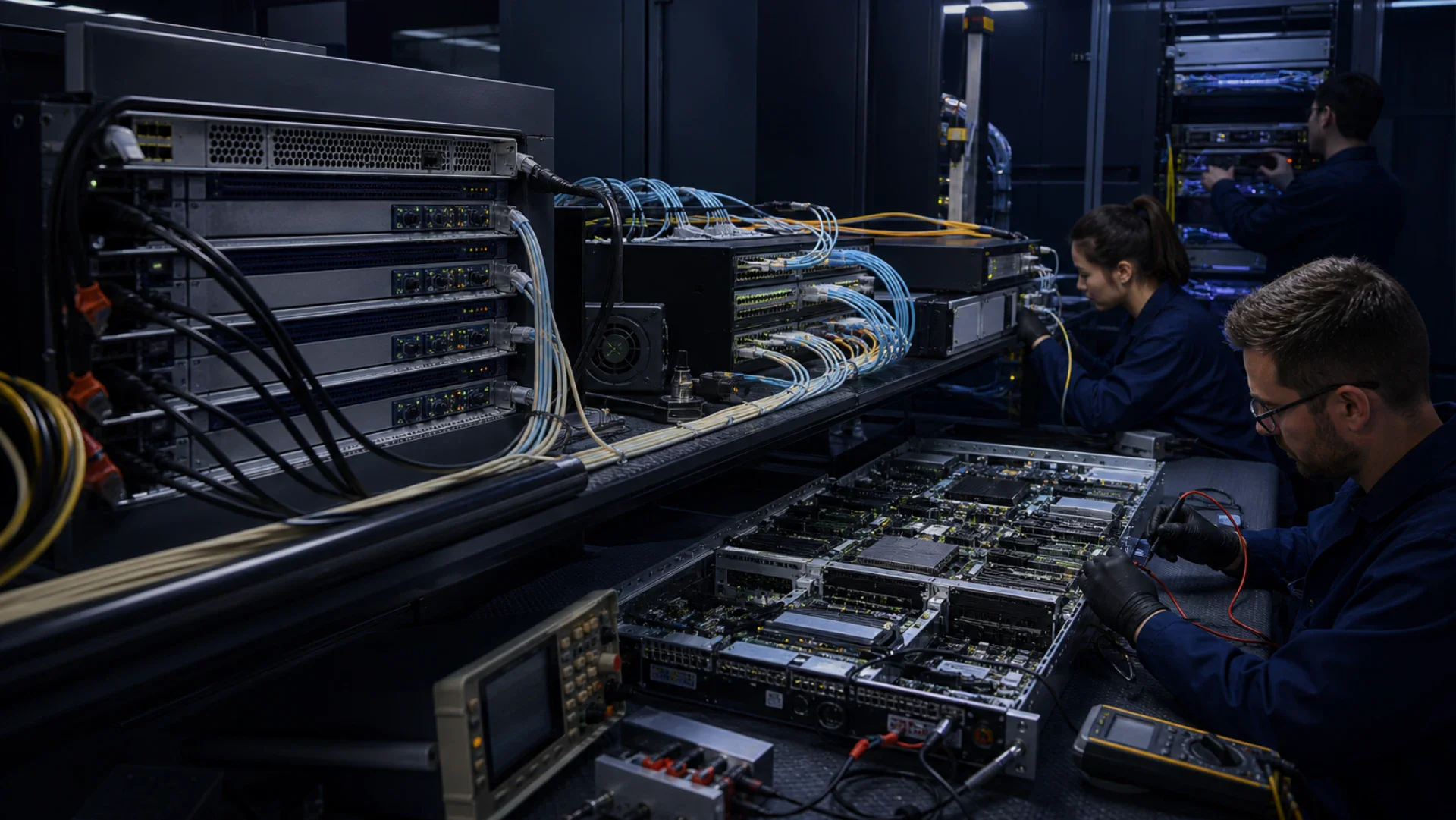
Latency, throughput and efficiency emerge from the complete processing path. Workload shape, data locality, concurrency, network behavior, storage, scheduling, backpressure and failure recovery can each become the constraint.
The solution pattern creates a shared model of demand, resource behavior, service dependencies and operating consequences.
Separate interactive, batch, streaming and background work; identify deadlines, bursts, priorities and acceptable degradation.
Map data size, locality, serialization, caching, replication and consistency choices across the processing path.
Examine compute, accelerators, memory, queues, network, storage and external-service limits as a connected system.
Relate scaling, admission control, backpressure, failover and recovery to observable workload behavior.
Measurement stays tied to a defined workload and environment, so architecture decisions remain reproducible rather than anecdotal.
The implementation may combine cloud services, dedicated compute, accelerators, high-speed networking, storage tiers or compact edge resources. Selection follows workload evidence, operational ownership, supply constraints and lifecycle needs.

Capacity controls, workload isolation, secure administration and recovery paths protect the system from becoming fast only in its ideal state.
Use priorities, admission rules, bounded queues and backpressure to keep overload behavior intentional.
Separate tenants, workloads and administrative paths where contention or access could create unacceptable consequences.
Define which work pauses, falls back or recovers when a dependency, zone, device or data path is impaired.
A training pipeline, retrieval service, transaction processor and live media workflow can use similar infrastructure yet fail for completely different reasons. CognoSys establishes a performance envelope for the actual workload, then designs placement, parallelism, storage, networking and recovery around the dominant constraints.
Shape batches, memory use, data loading and scheduling around accelerator characteristics. Separate interactive and throughput-oriented demand so one workload class does not silently starve another.
Evaluate serialization, cache policy, object and block storage, replication and network hops as part of the same latency and cost path.
Instrument queue time, dependency fan-out, garbage collection and connection behavior; apply admission and degradation before saturation turns into cascading failure.
Place work according to data gravity, availability, hardware access and operating ownership. Treat cross-environment movement, identity and observability as first-class architecture.
CognoSys connects workload characterization, architecture, instrumentation and validation in one method. Performance objectives are expressed with the workload mix, data shape, environment, concurrency, percentile and failure conditions that make the result useful for capacity and continuity decisions.
Share the unit of work, traffic shape, data path, latency or throughput objective, current bottlenecks, failure expectations and operating environment. We will frame the measurement and architecture path.